How to Review Your Bank Statement and Spot Forgotten Expenses

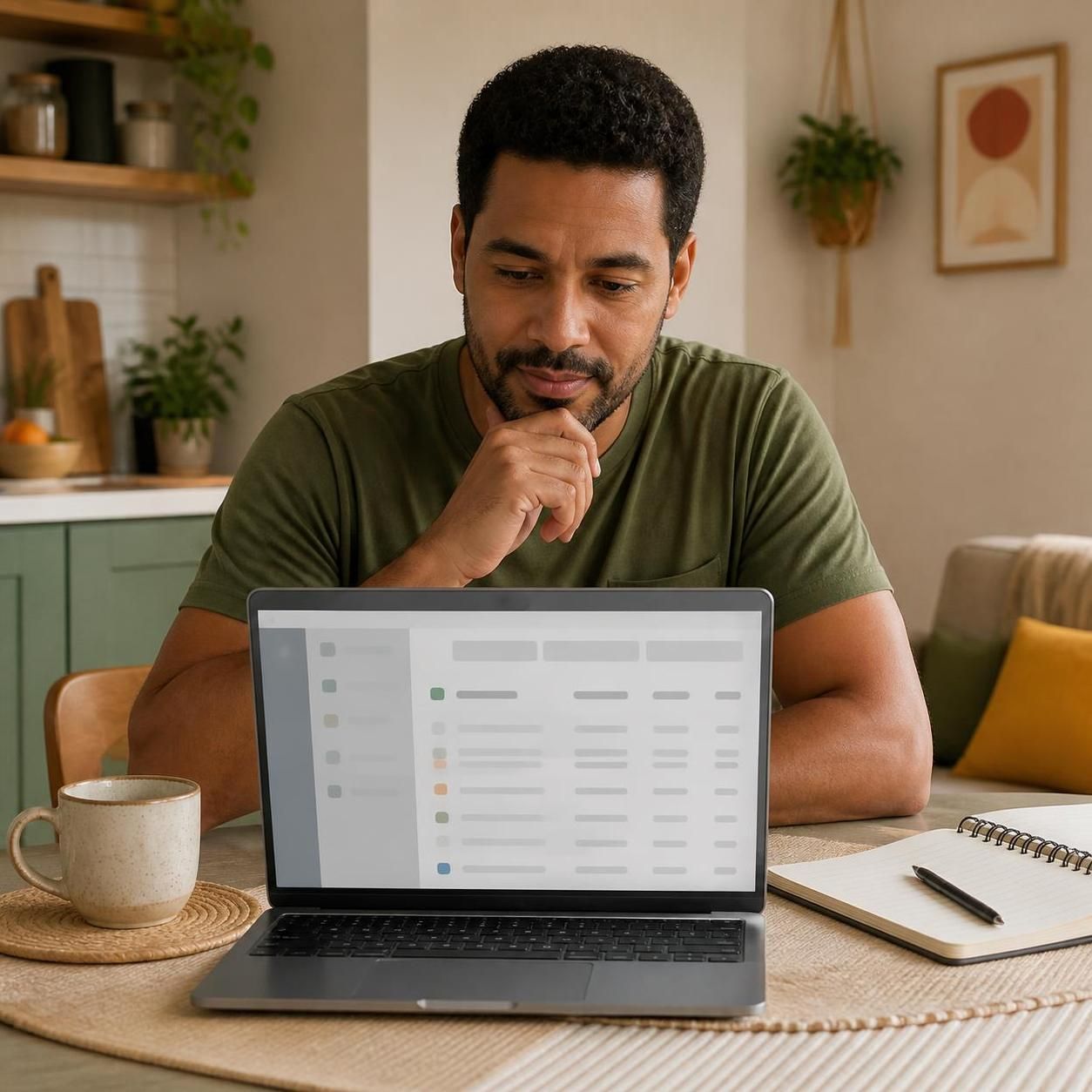
Reviewing your bank statement is one of the most effective ways to find expenses that go unnoticed in your day-to-day life — subscriptions you no longer use, improperly charged fees, duplicate entries, and transactions you don't recognize. This guide shows a practical checking method that doesn't rely on memory or complicated spreadsheets.
Why Reviewing Your Statement Matters
Your bank statement is the official record of everything that comes in and out of your account. It brings together payments, transfers, fees, and automatic transactions that often repeat without you noticing. A streaming subscription you cancelled but that keeps being charged, or a maintenance fee whose amount changed, are common examples of expenses that only show up when the statement is reviewed carefully.
Reviewing your statement isn't about distrusting your bank. It's a financial organization habit that helps you keep control of your money and identify charges that don't match what you signed up for. The Central Bank of Brazil, in its financial education material, reinforces the importance of tracking your personal budget and expenses in an organized way — and the statement is the foundation of that tracking.
How to Check Your Transactions
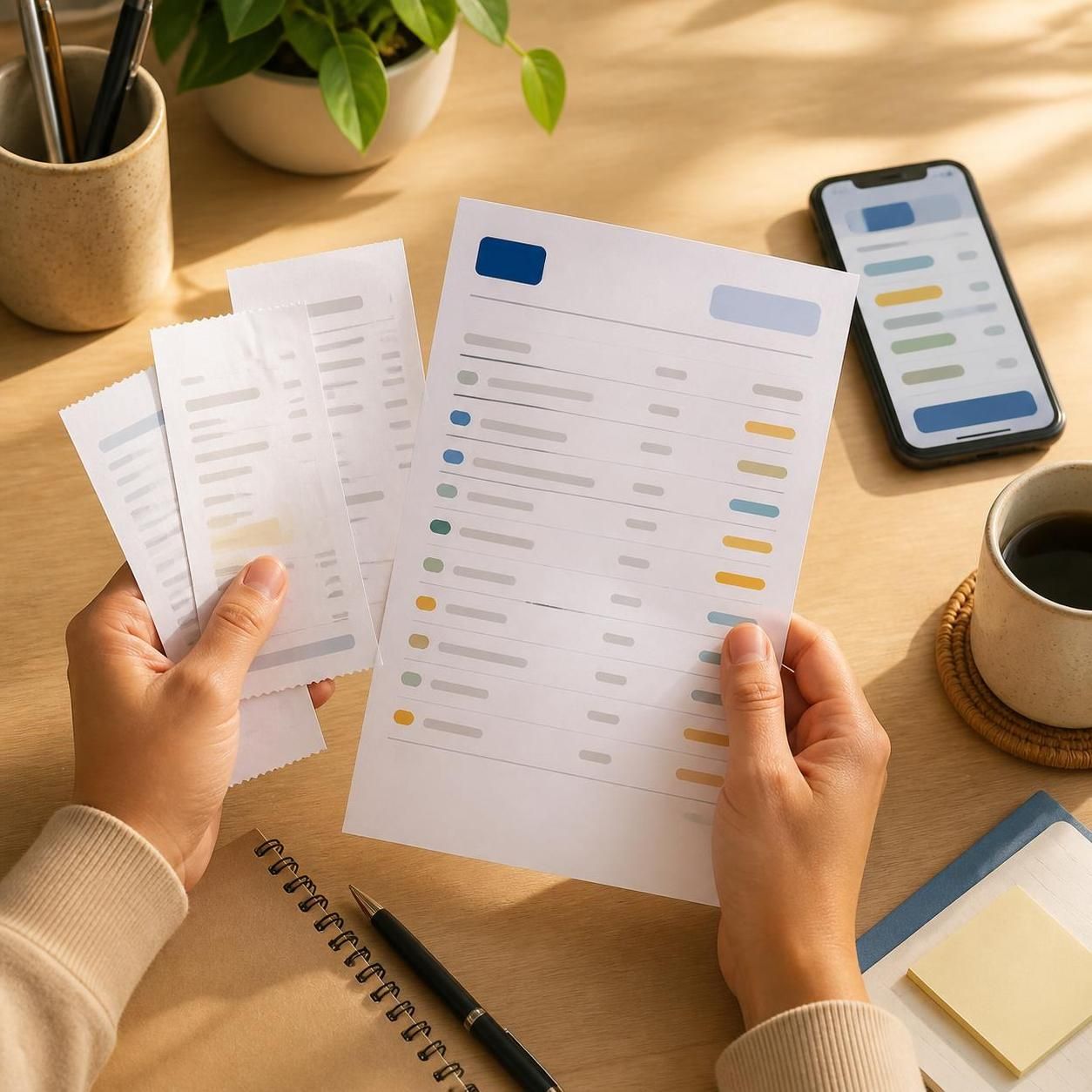
Checking your transactions is the first step. It consists of verifying whether each transaction that appears on your statement corresponds to an operation you actually made or authorized.
Start with the most recent period and work backwards. For each entry, ask:
- Do I recognize this transaction? If yes, confirm the amount and the date.
- Was this purchase made by me or by someone authorized? Additional cards and joint accounts require extra attention.
- Is the amount correct? Compare it with the receipt or with the notification you received at the time of purchase.
A practical tip: use your bank's app to check the notifications for each purchase. Most banks send an alert at the time of the transaction. If you keep those notifications, it's easier to cross-reference them with the statement.
Payments: Check Dates and Amounts
Recurring payments — electricity, water, internet, phone, monthly fees — are the ones that generate the most doubts during review. They tend to vary in amount, and it's normal not to remember exactly how much you paid the previous month.
To check payments efficiently:
- Compare with the previous month: if your electricity bill went up 30% with no apparent reason, it's worth investigating.
- Check the due date and the payment date: a delay can generate fines and interest that appear on the statement as a separate amount.
- Check whether the payment was actually settled: sometimes a payment is scheduled but not processed, generating a duplicate charge the following month.
If you pay bills by automatic debit, check whether the debited amount matches the invoice amount. Typing errors when reading the barcode can generate payments with incorrect amounts.
Fees: What to Look For
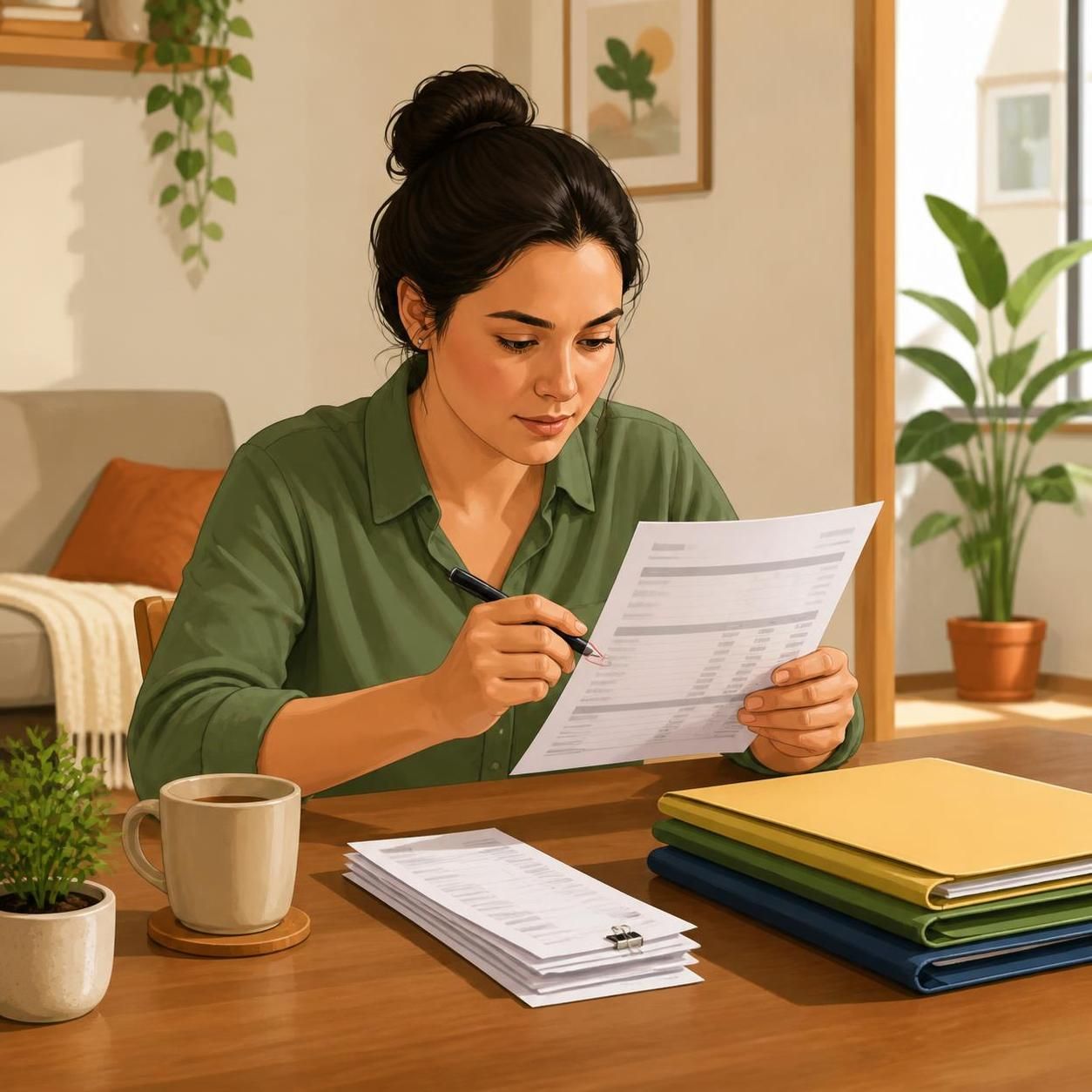
Bank fees are charges the bank makes for services such as account maintenance, transfers, withdrawals, and document issuance. They appear on the statement with names like "fee," "service package," or "basic basket."
When reviewing fees, note:
- The frequency: most fees are monthly. If a fee appears twice in the same month, it may be an improper charge.
- The amount: compare it with the amount informed when you signed up for the service package.
- The description: fees with generic names or codes you don't recognize deserve investigation.
It's worth remembering that fees and service packages are regulated by the Central Bank of Brazil, and banks are required to inform the amounts. If you identify a charge that doesn't match what you contracted, the path is to file a complaint with the bank itself.
Unrecognized Transactions: How to Act
An unrecognized transaction is any entry you can't associate with a purchase, payment, or transfer you made. It could be a small amount, like a R$ 5 purchase at an establishment you don't frequent, or a larger amount.
The first step is not to ignore it. Even small amounts can indicate:
- Duplicate charge: the same purchase entered twice.
- Unauthorized purchase: someone used your data without your permission.
- Establishment error: the card machine recorded a different amount.
Before concluding it's fraud, check:
- Whether someone from your family or close circle used the card.
- Whether the purchase was made on a date when you were somewhere else.
- Whether the establishment name on the statement matches the name that appears in the notification.
If the transaction remains unexplained, the procedure is to contact the bank immediately. The sooner you report it, the faster the bank can investigate and, if applicable, reverse the amount.
Data Security During Review
When reviewing your statement, you're dealing with sensitive information: account number, branch, amounts, balance. Therefore, the security of your data should be a constant concern.
Some recommended practices:
- Access your statement through the bank's official app or directly on the website, typing the address in your browser. Avoid links received by email or message.
- Don't share screenshots of your statement in groups, social networks, or messaging apps, even if it's "just to ask a question."
- Be wary of contacts asking for your banking details while posing as the bank. The bank does not ask for passwords, tokens, or codes by phone or message.
- Keep the app updated and use two-factor authentication when available.
Remember: this content is educational and does not replace guidance from your bank or a professional. If you have doubts about a transaction, the bank's official channel is always the safest path.
Common Mistakes When Reviewing Your Statement
Even those who review their statement frequently make mistakes. The most common are:
- Reviewing only the balance: looking only at the final balance without checking the entries doesn't help identify forgotten expenses.
- Ignoring small amounts: a R$ 3 charge can go unnoticed, but repeated over 12 months, it becomes R$ 36 — and it could be a sign of an active subscription.
- Not comparing periods: reviewing a single month's statement in isolation doesn't show patterns. Comparison with previous months is essential.
- Trusting memory: "I don't think I made this purchase" isn't a check. Always verify the notification or the receipt.
- Postponing the review: the more time passes, the harder it is to remember each transaction. The ideal is to review at least once a month.
Illustrative Checking Example
| Statement entry | Amount | What to check | Action |
|---|---|---|---|
| Streaming subscription | R$ 39.90 | Do you still use the service? | Cancel if not in use |
| Maintenance fee | R$ 25.00 | Does it match the contracted package? | Compare with the contract |
| Restaurant purchase | R$ 87.00 | Were you at that restaurant on that date? | Check the notification |
| Transfer | R$ 150.00 | Did you make this transfer? | Verify the recipient |
| Automatic electricity debit | R$ 210.00 | Does the amount match the invoice? | Compare with the bill |
FAQ
How often should I review my statement? The ideal is a monthly review, right after the invoice closes or at the beginning of the month. The more frequent, the easier it is to identify problems.
What should I do if I find a charge I don't recognize? Contact the bank through the official channel and file a dispute. Keep the service protocol number.
Can bank fees be questioned? Yes. If the fee doesn't match the contracted package or was charged in duplicate, you can dispute it with the bank.
Do I need to keep old statements? Keeping statements for at least one year is good practice, especially for checking payments and disputing charges.
Is the credit card statement different from the account statement? Yes. The card statement shows purchases made on credit; the account statement shows the paid invoice and current account transactions. Both should be reviewed.
Applicable Summary
Reviewing your bank statement is a simple habit that can prevent losses and bring clarity about your expenses. The method is:
- Check each entry, asking whether you recognize the transaction.
- Compare payments with the previous month and with the invoices.
- Observe fees regarding frequency and amount.
- Investigate unrecognized transactions without delay.
- Protect your data when accessing and sharing banking information.
Start with this month's statement. Set aside 15 minutes, go entry by entry, and write down everything you don't recognize. That's the first step toward more solid financial control — and toward finding expenses that were hidden among so many transactions.
For a broader Brazilian household plan, read how to prepare a household budget and how to set financial goals.
Sources for Further Reading
- Central Bank of Brazil — Financial Education: Personal Budget: https://www.bcb.gov.br/pre/pef/port/folder_serie_II_orcamento_pessoal.pdf
- Securities and Exchange Commission of Brazil (CVM) — Plan your expenses: https://www.gov.br/investidor/pt-br/investir/antes-de-investir/organize-a-sua-vida-financeira/passo-03-planeje-os-seus-gastos
This content is educational and does not constitute individual advice on credit, investment, or any financial product. If you have questions about your specific situation, contact your bank or a trusted professional.