
How to Plan Car Expenses Beyond Fuel

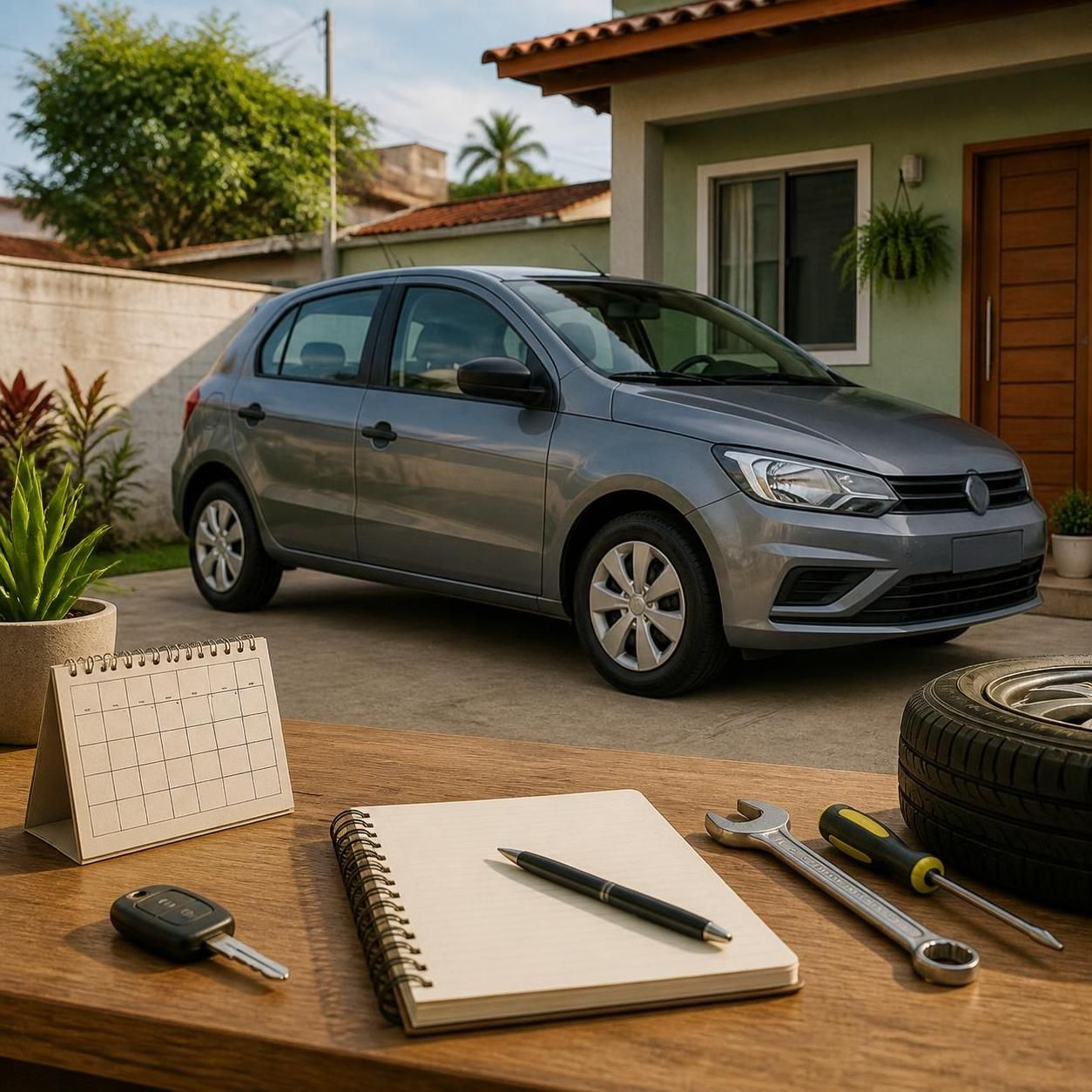
Owning a car involves much more than the price at the fuel pump. Anyone who buys a vehicle without considering the fixed and variable costs that come with it can strain the family budget in the first few months. This article presents a practical plan for organizing car expenses into two main categories — predictable costs and unexpected costs — covering maintenance, documentation, and insurance, without inventing rates or fees.
Why the Cost of a Car Goes Beyond Fuel
Fuel is the most visible expense, but it is rarely the largest. A vehicle requires regular payments that do not depend on how much you drive: insurance, IPVA, licensing, periodic servicing, and, eventually, repairs. Added together, these amounts can exceed the total spent on gasoline or ethanol over the course of a year.
The first step in planning is to change your mindset: the car does not cost "just the fuel." It costs an average monthly amount that includes all mandatory and occasional items. By calculating this average amount, you avoid surprises and can decide clearly whether the vehicle fits your budget.

Predictable Costs: What You Know You Will Pay
Predictable costs are those that occur on known dates or at regular intervals. They should be in your monthly and annual budget from the very first month.
| Category | Frequency | How to Plan |
|---|---|---|
| Fuel | Weekly or monthly | Estimate the average km driven and the vehicle's consumption |
| Insurance | Monthly or annual | Research before buying the car; the price varies by profile and region |
| IPVA and licensing | Annual | Set aside a monthly amount throughout the year |
| Periodic servicing | Every 10,000 km or per the manual | Consult the owner's manual and the manufacturer's schedule |
| Tire replacement | Every 2 to 5 years | Consider wear and the type of use |
One effective technique is to divide annual costs by 12 and set aside that amount every month in a separate account. That way, when IPVA comes due, the money is already available and does not compete with other expenses for the month.
Unexpected Costs: How to Prepare for the Unforeseen
Even with maintenance up to date, unforeseen events happen. A flat tire, a part that breaks outside of scheduled servicing, or a minor accident can generate unplanned expenses. The practical recommendation is to keep a specific reserve for the car, separate from your general emergency fund.
The size of this reserve depends on your vehicle and your usage, but a common reference is to set aside the equivalent of one or two full servicing visits. If the car is older or has high mileage, the reserve tends to be larger. The important thing is that this money exists before the problem occurs — not after.

Maintenance: Preventive Is Cheaper Than Corrective
Preventive maintenance follows the schedule in the owner's manual. It includes oil changes, filters, spark plugs, belts, and fluids at intervals defined by the manufacturer. Following this schedule prevents small wear from turning into expensive breakdowns.
Corrective maintenance, on the other hand, is done after something has broken. It tends to be more expensive because it involves emergency labor and, often, urgently sourced parts. The practical rule is simple: the cost of preventing is almost always lower than the cost of repairing.
A common mistake is postponing servicing "to save money." In practice, this increases the risk of larger damage and reduces the vehicle's resale value. A car with an up-to-date maintenance history is worth more and sells faster.
Documentation: The Mandatory Costs That Cannot Be Forgotten
Every vehicle has mandatory documentation costs. IPVA and annual licensing are the main ones, but there are others depending on the state and the vehicle's situation, such as transfer fees in the case of a purchase and sale.
The planning here is twofold. First, set aside the amount monthly throughout the year. Second, keep payments up to date — late payments generate fines and interest that increase the total cost. It is not possible to give exact amounts because they vary by state, model, and year of the vehicle. The important thing is to include these items in the annual budget from the start.
Insurance: Protection That Needs to Fit the Budget
Car insurance is a predictable cost, but the amount varies greatly. It depends on the driver's profile, the vehicle model, the region, the claims history, and the coverage chosen. Before buying the car, research the insurance cost for that model — it can change your decision.
There are two common mistakes. The first is taking out minimum coverage to save money and discovering later that it does not cover what you need. The second is having no insurance at all and bearing the full loss in the event of an accident or theft. The balance lies in choosing coverage appropriate to your profile and the vehicle's value, within what the budget allows.
Common Mistakes in Planning Car Expenses
- Ignoring depreciation: the car loses value every year. This is not a monthly cost, but it affects your assets and resale value.
- Underestimating the cost per kilometer: divide all car expenses by the number of km driven. The real result is usually higher than expected.
- Mixing the car reserve with the checking account: if the money is in the same account, it ends up being used for other expenses.
- Postponing maintenance due to lack of planning: delayed maintenance becomes an emergency repair, always more expensive.
- Not reviewing the budget annually: insurance rates, IPVA, and maintenance costs change. Review the plan at least once a year.
FAQ
What is the difference between a predictable and an unexpected cost? A predictable cost is one you know will occur, such as IPVA, insurance, and servicing. An unexpected cost is one that arises without warning, such as a breakdown or a flat tire.
How much should I set aside per month for the car? Add up all annual costs (insurance, IPVA, servicing, licensing) and divide by 12. That is the minimum monthly amount. Add a margin for unforeseen events.
Is it worth having insurance even with an old car? It depends on the vehicle's value and your risk profile. For low-value cars, insurance may not be financially worthwhile, but the decision is personal and should consider what you can afford in the event of a total loss.
How do I know the real cost per kilometer of my car? Add up all expenses for the year (fuel, maintenance, insurance, documentation) and divide by the total km driven in the same period.
What if the unforeseen event is larger than the reserve? The car reserve should be built up gradually. If the unforeseen event is larger, consider installment options or prioritize the essential repair for safety and leave the cosmetic one for later.
Sources for Further Reading
To organize your personal budget and plan expenses in a structured way, the Central Bank of Brazil provides educational material on personal budgeting: https://www.bcb.gov.br/pre/pef/port/folder_serie_II_orcamento_pessoal.pdf
The CVM also publishes guidance on how to plan expenses before investing, which applies to the general organization of your finances: https://www.gov.br/investidor/pt-br/investir/antes-de-investir/organize-a-sua-vida-financeira/passo-03-planeje-os-seus-gastos
To go deeper into the topic of family budgeting, see our guide: Family budget: how to do it. And to set savings goals for the car, consult: Financial goals: how to define them.
Applicable Summary
Planning car expenses requires separating the predictable from the unexpected. List all annual costs, divide by 12, and set aside that amount monthly. Keep a specific reserve for unforeseen events. Follow the maintenance schedule in the manual. Research insurance before buying the vehicle. And review the plan at least once a year.
This content is strictly educational and does not constitute individual advice on credit, investment, or the contracting of financial products. For specific decisions, consult a qualified professional.