
Selic Rate: What It Is, How It Works, and Why It Affects Your Money


The Selic rate is Brazil's benchmark interest rate and the Central Bank's main tool for controlling inflation. When it rises, credit becomes more expensive and fixed-income investments tend to yield more; when it falls, the opposite happens. Understanding how it works helps you make better decisions, both as an investor and as a consumer.
In this guide, you'll learn what the name "Selic" means, who sets the rate, how it is maintained, and why it affects your wallet.
What is the Selic rate?
The name "Selic" comes from Sistema Especial de Liquidação e de Custódia (Special Settlement and Custody System), a financial market system administered by the Brazilian Central Bank. It is used for the custody, registration, and settlement of book-entry federal government bonds.
In other words, "Selic" is, in practice, two related things:
- The system for custody and settlement of government bonds, operated by the Central Bank;
- The rate calculated from transactions in that system — the economy's benchmark interest rate.
When you read that "the Selic went up" or "the Selic went down," the reference is to the rate set by the Copom, not to the system itself.
How is the Selic rate set?
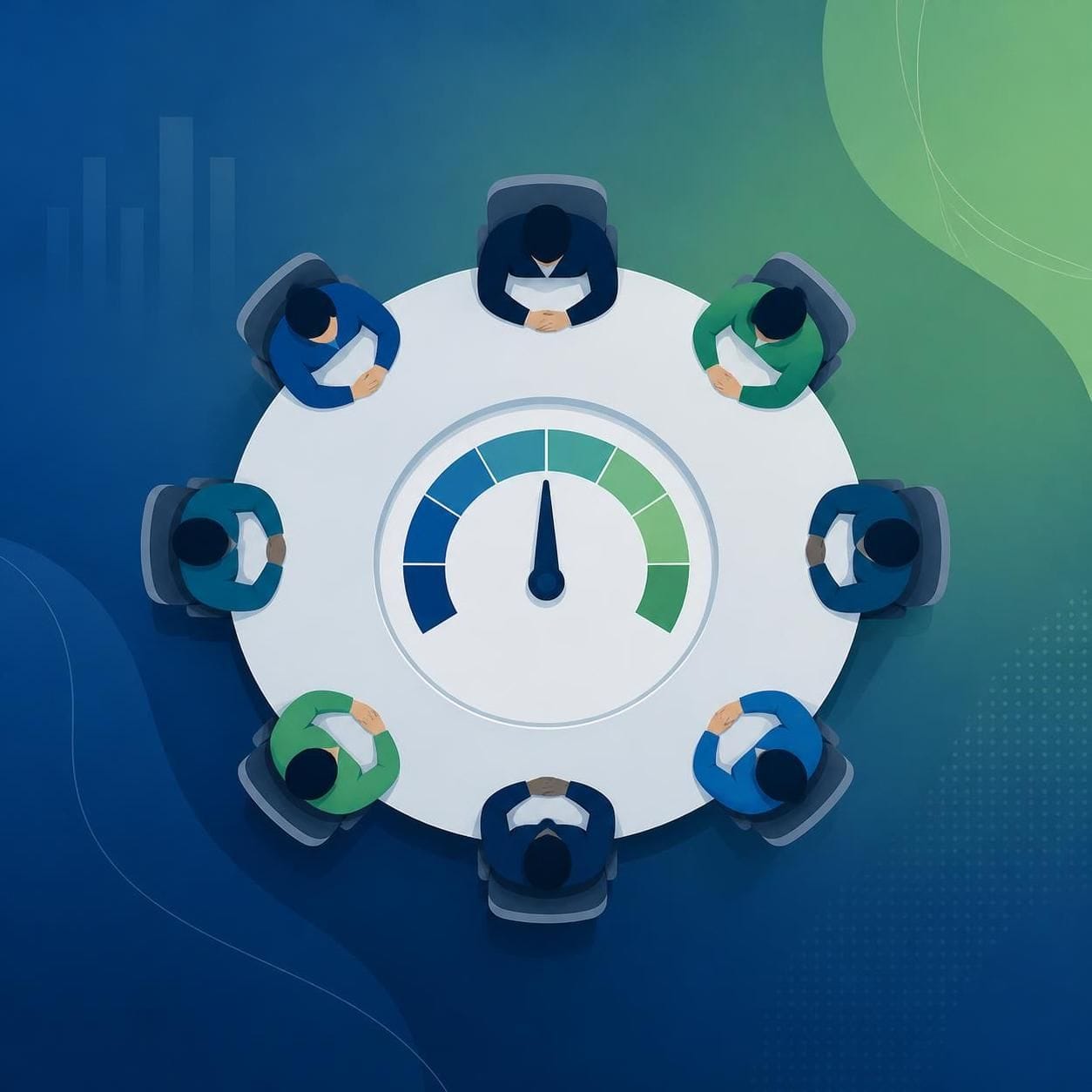
The Selic target rate is set by the Copom (Monetary Policy Committee), a committee of the Central Bank. This happens in periodic meetings, in which the committee assesses the economic outlook — mainly the inflation trajectory — and decides whether the rate goes up, down, or stays the same.
After the Copom sets the target, it is up to the Demab (Open Market Operations Department) to manage liquidity in the market for bank reserves so that the effective Selic rate — the one that actually circulates in the market — stays in line with the established target.
In practice, the effective rate stays very close to the target set at Copom meetings.
Why does the Central Bank move the Selic rate?
The central goal is to control inflation:
- Higher Selic: makes credit more expensive, discourages consumption, and helps contain inflation.
- Lower Selic: makes credit cheaper, stimulates consumption and investment, but can put pressure on inflation if used in excess.
It's a balancing act: the rate needs to be high enough to keep inflation under control without suffocating economic activity.
How the Selic rate affects your investments

The Selic rate influences the entire interest rate structure of the country — loans, financing, and financial investments. In fixed income, it is especially relevant:
| Investment type | Relationship with the Selic rate |
|---|---|
| Tesouro Selic (Selic Treasury) | Yields in line with the Selic rate's variation |
| Post-fixed CDB | Usually pays a percentage of the CDI, which closely tracks the Selic |
| Savings account (poupança) | Yield rule tied to the Selic (with a formula change when the rate is at 8.5% per year or lower) |
| LCI/LCA | Exempt from income tax, generally tied to the CDI |
If you want to see in practice how this translates into yield, check how much R$ 1,000 earns in a CDB and the complete guide to fixed income.
An important point: the relationship between the Selic rate and investments is qualitative and depends on the type of bond, the term, and market conditions. No yield is guaranteed simply because the Selic is at a certain level.
How the Selic rate affects your debts and credit
The same mechanism that benefits the investor makes credit more (or less) expensive:
- Loans and financing with variable rates tend to become more expensive when the Selic rises.
- Credit cards and overdraft are also influenced by the cost of money in the market — which is why, in periods of high Selic, the credit card revolving balance and the overdraft become even heavier.
For those with debt, understanding the Selic cycle helps with planning: in rising cycles, it's worth prioritizing paying off expensive debt; in falling cycles, renegotiating may become more advantageous.
Selic, CDI, and savings: what's the difference?
- Selic: the benchmark rate, set by the Copom.
- CDI: a rate that reflects interbank transactions and closely tracks the Selic; it is the reference for most CDBs and LCIs/LCAs.
- Savings account (poupança): yield defined by legal rule, which changes according to the Selic level — when the rate is at 8.5% per year or lower, the correction formula changes (0.5% per month plus the TR variation); above that level, it yields 70% of the Selic plus the TR.
In practice, the Selic is the "mother" of the other rates: when it moves, the CDI, credit, and savings tend to adjust. To compare in practice how these rates translate into yield, see the comparison between CDB, Tesouro Selic, and savings.
Risks, costs, and limitations
- The Selic rate is volatile: the Copom can change it at every meeting, depending on inflation and the economy.
- Post-fixed investments carry yield uncertainty, because they depend on the future behavior of the rate.
- Fixed-rate investments may gain or lose relative to other alternatives depending on the Selic trajectory.
- Taxation and liquidity vary by product — check the regressive income tax table for fixed income before investing.
Common mistakes when following the Selic rate
- Thinking the Selic guarantees a return — it is a reference, not a promise.
- Ignoring the investment term — the rate may change before maturity.
- Forgetting taxes and fees — gross yield is not net yield.
- Taking on expensive debt without comparing — the total effective cost matters more than the nominal interest rate; see the guide on total effective cost (CET) in loans.
FAQ
Is the Selic the same as the CDI? No. The Selic is the benchmark rate set by the Copom; the CDI reflects interbank transactions and closely tracks the Selic, but they are different rates.
Who sets the Selic rate? The Copom, a committee of the Central Bank, in periodic meetings.
Why does the Selic affect savings accounts? Because the savings yield rule is defined as a function of the Selic: when the rate is at 8.5% per year or lower, savings yield 0.5% per month plus the TR variation; above that level, it yields 70% of the Selic plus the TR.
Is a high Selic rate good or bad? It depends on the point of view: it tends to be better for those investing in post-fixed fixed income and worse for those with debt or who want to finance purchases.
Conclusion
The Selic rate is the central reference for interest rates in Brazil: the Copom sets it to control inflation, and it spreads through loans, financing, and investments. For your day-to-day life, what matters is understanding the direction of the effect: a high Selic tends to favor post-fixed investments and make credit more expensive; a low Selic does the opposite. Use this understanding to compare alternatives with attention to terms, costs, and taxation — and remember that no rate, by itself, guarantees a result.
This content is educational and does not constitute investment advice; past performance or current rules do not guarantee future results.
Related articles:

